Author: An Interview with Tenzin (Tendor) Dorjee

Rangzen: The Movement for a Free Tibet and a Call for a Decolonial Movement Dharma

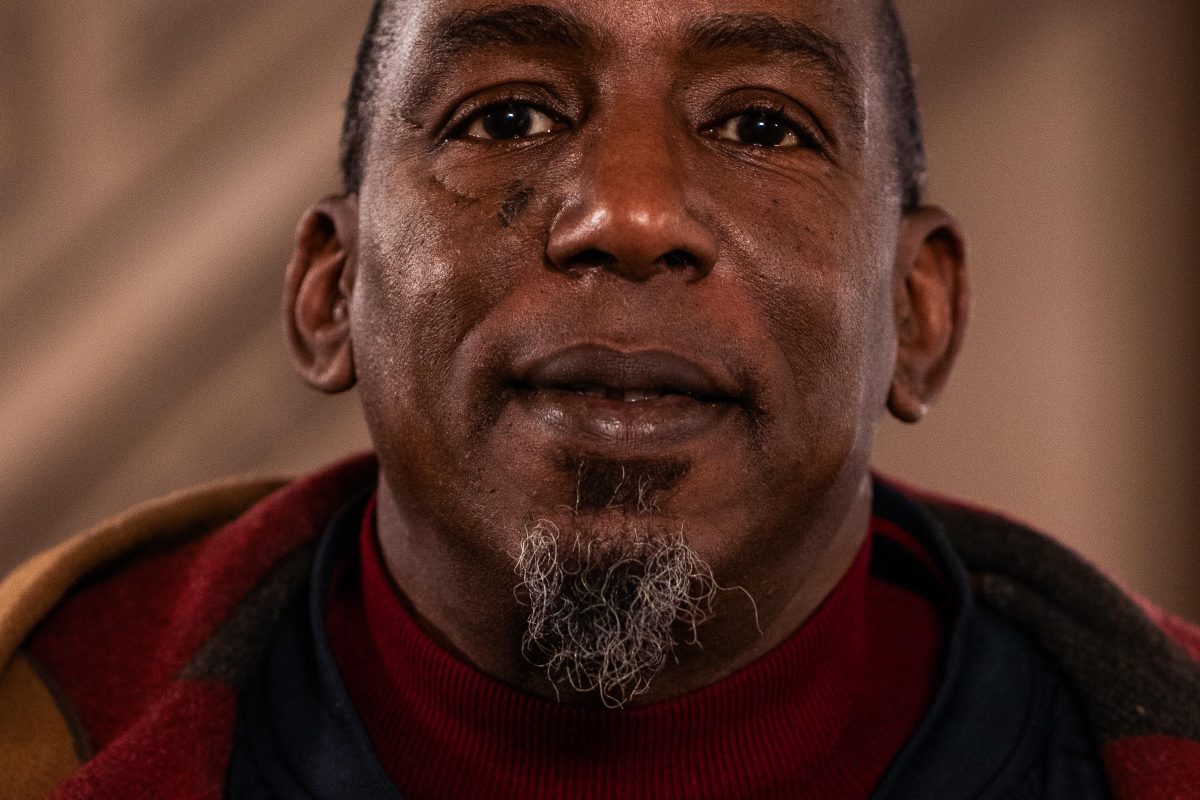
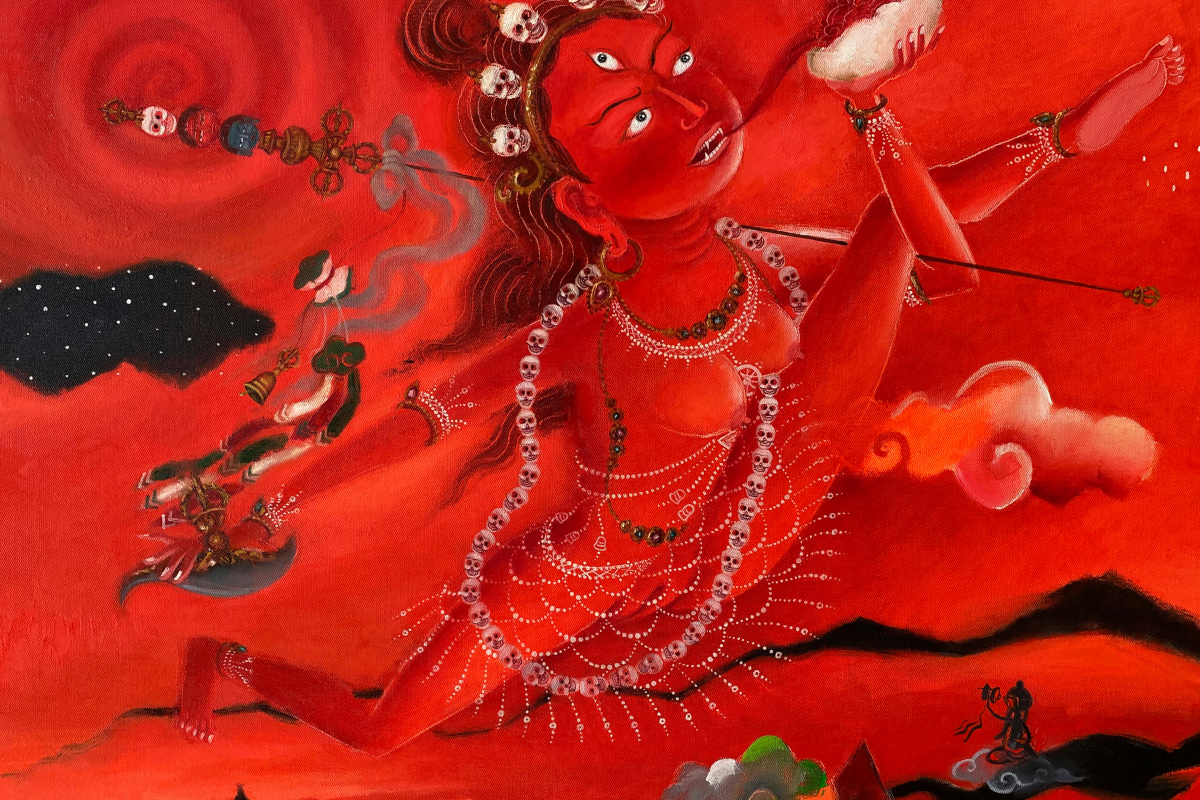
Editor’s Note The following interview with Tenzin (Tendor) Dorjee, Director of Research and Advocacy at Tibet Action Institute, and former director of Students for a Free Tibet, took place over thali and momos in Jackson Heights, Queens. It has been lightly edited for clarity and flow. I was eager to speak with a leader of Rangzen—the Tibetan Freedom movement—about Buddhist movements for liberation and the perceived support for this movement among contemporary Buddhist practitioners in North America. In the spirit of this special issue on Movement Dharma, which aims to (re)awaken political consciousness and engagement among Buddhist practitioners, it felt necessary not only to center indigenous decolonial movements, but also to honor the lineage and culture of Tibetan Buddhism, from and through which so many of us practice and have received teachings. Tendor and I met shortly after the self-immolation of Tibetan activist, Logba Rangzen. In protest of China’s ongoing occupation and cultural genocide of Tibet, Logba Rangzen self-immolated in front of the United Nations on July 2, 2026, the day after China announced its …
Navayāna Buddhist Ministry: Dr. Ambedkar’s Dhamma and the Making of a Buddhist Movement Chaplaincy for Social Democracy and Liberation

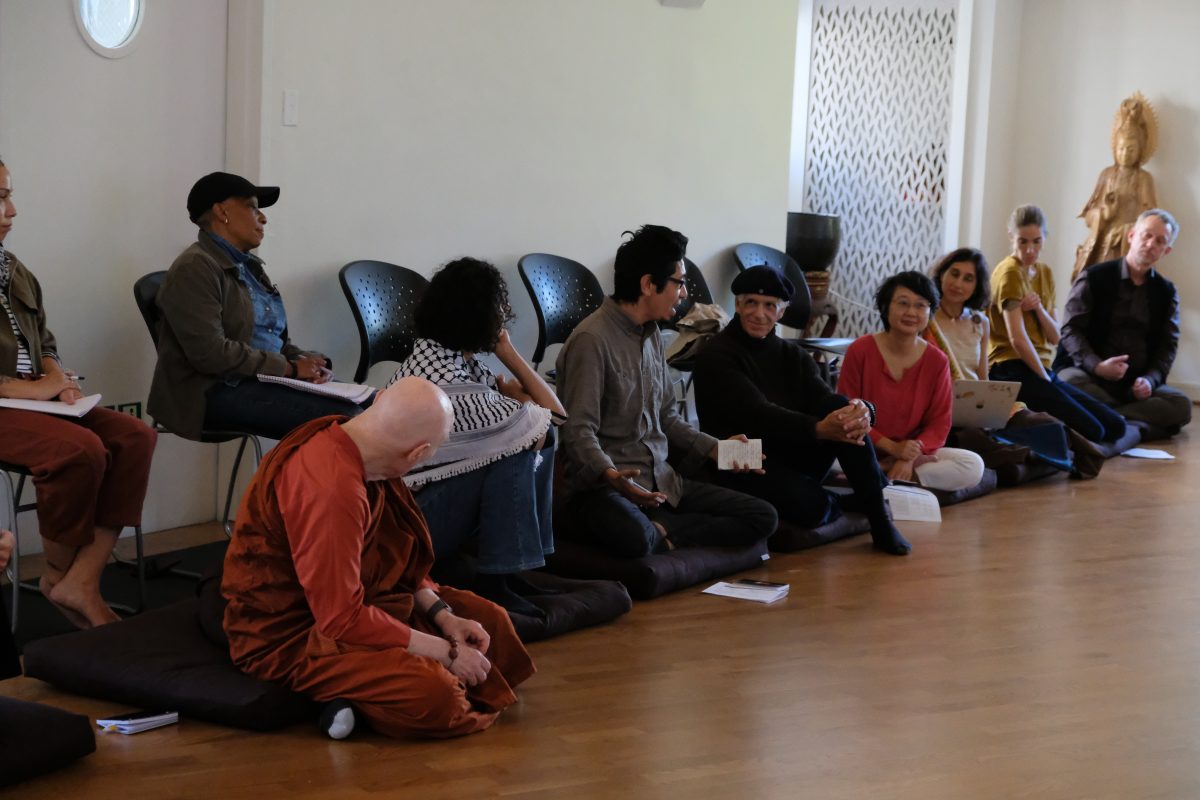
We are in urgent need of spiritual leadership equal to the interlocking social, economic, political, and ecological crises of our time – crises that are, at their root, relational and dualistic, born of the many ways human beings have learned to treat one another as separate, as ranked, as disposable. Nearly seventy years before this call was written, Dr. B. R. Ambedkar arrived at strikingly similar terms for a comparably total crisis. In 1956, nearly a decade after Indian Independence, Ambedkar embraced Buddhism, an act that opened a new window through which to view Indian history, particularly for the lower castes and all those who had long suffered under the hierarchies of the caste system. The process of building a new India had already set in motion a range of competing ideological visions, each seeking to reconstruct a national culture capable of honouring both the proud heritage of the ancient past and the egalitarian promises of the modern future. This search drew many creative thinkers toward a progressive and experimental modernism in art and culture, …

Hart Island

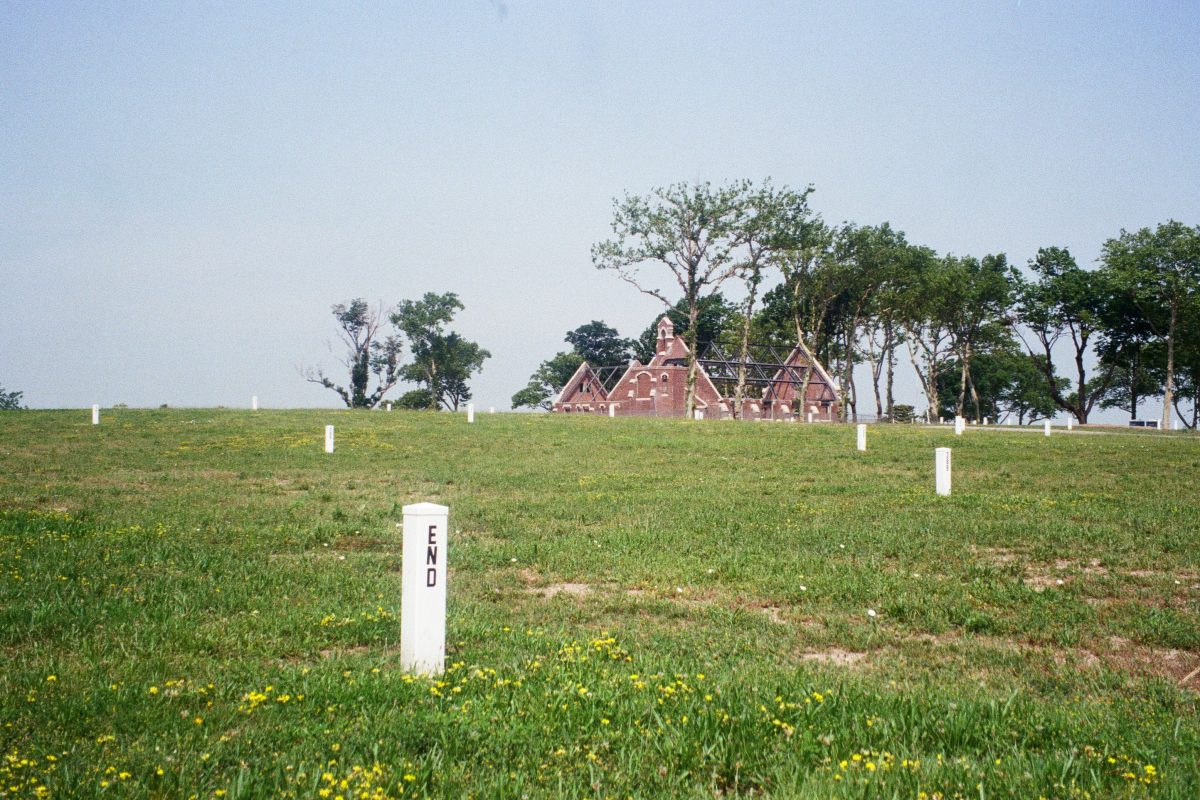
“Then Judas, who had betrayed Him, saw that he was condemned, repented himself, and brought again the thirty pieces of silver to the chief priests … and they took counsel, and bought with them the potters field to bury strangers in.” – Gospel of St. Matthew (27:3-8)   When a spirit, a mindstream, a bundle of karmic tendencies slips from the body like a tight shoe, or–for the materialists–when the life force of an organism is stamped out by the natural laws of death, its once-animated form is left behind. What will come of this form?  From the beginning, homosapiens have devised an abundance of ways to deal with our dead. We bury them (in the ground, at sea, in caverns), burn them, entomb them (the Great Pyramid!), compost them (green burials), and ceremonially dismember them on high mountain plateaus where carrion eaters have received human corpse offerings for generations (look up Tibetan sky burial for more on that one).  But what of the dead who, in the cold atomization of modernity, die alone, unclaimed, …

Co-Editor’s Introduction: Movement Dharma

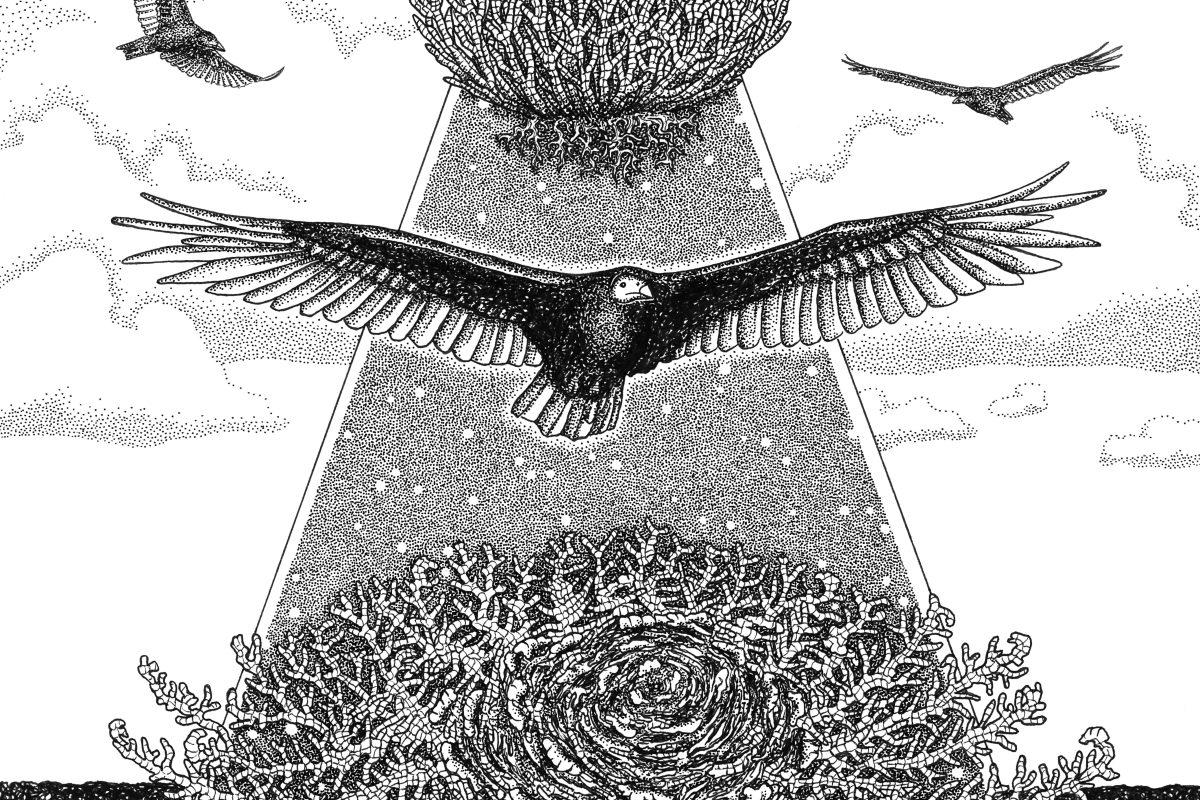
An Ode to Vultures, Sky Burial, and Kali Ma My eyes adjust to darkness. More evolved creatures know this, do not fear dusk but come fiercely alive in its violet tunnel. Coyotes, bush cats, vultures— eternal mothers and daughters conceived by wind, winged pneuma. From what other scavengers can I learn? What tricksters and soldiers? I am dim, stunned. I recently rediscovered these words I scrawled in a journal entry five years ago, steeped in grief. The sense memory of that darkness feels appropriate to autumn’s approach here in the northern hemisphere. What insight could I offer in the yearly descent to darkness, in an age of darkness? Like I did five years ago, I must defer to the crepuscular and carrion-eating. Like the vultures that eat flesh from sky burials, I want to keep my eyes open to the life-sustaining potential in death: the death of our sociopolitical systems, of our expectations of civilization, of my ego. Easier said than done. What about the death of entire species and languages, of our most innocent, …

Special Guest Editor’s Introduction: Movement Dharma

Since the second reign of Trump began, I have wondered whether to live by Buddhist vows in this moment requires us to question the way that training in those vows has been presented. In my own training and mentoring of chaplains, I have felt, again and again, the limits of spiritual care when it is imagined only as something that happens beside an individual bed, in a zendo or interview room, or at the threshold of a personal crisis. I have observed the need for care in the community meetings, anti-ICE trainings, interfaith gatherings, and movement spaces where people are simultaneously holding collective grief while building collective possibility. The crises that draw me toward this work are political, economic, ecological, and deeply intimate. I care for and love the many beings with whom I am in relationship. When they hurt, I hurt, and I am not alone. This hurt lives in our bodies. It lives in the ways we have been taught to separate ourselves from one another, from the Earth, from history, and from …

Editor’s Introduction: Movement Dharma

I am so excited to share this special issue of The Arrow Journal, “Movement Dharma: Towards a Buddhist Movement Chaplaincy.”  We co-produced this issue with Union Theological Seminary’s Buddhist Studies Program, which I now call home, out of a shared sense of commitment to liberatory praxis and around a core set of questions concerning the dharma and its relevance and accessibility in these times. American Buddhism stands at a critical juncture. While Buddhist communities have grown significantly across the United States, contributing contemplative practices and philosophical insights to millions of practitioners, Buddhism remains largely absent from public discourse on the urgent moral and social challenges of our time. Unlike Christian, Jewish, and Islamic traditions, which have developed robust frameworks of public theology, Buddhism has yet to develop a sustained, visible public theological voice in the American context. This absence is not due to any inherent limitation in Buddhist thought. Buddhist scriptures offer profound resources for addressing contemporary crises, and many of our Buddhist communities have a distinguished history of public activism. Yet in recent years, …

Movement Dharma: Towards a Buddhist Movement Chaplaincy

Our movements for justice and liberation are facing profound challenges in the face of rising authoritarianism, polarization, and violence. We are in need of politicized spiritual leaders and spiritual political leaders who can not only help us bear witness to suffering, but who can also provide transformative vision to help us realize our collective potential for liberation. While movement chaplaincy has been practiced arguably for generations—though it may not always have been named as such—no theorization of what Buddhism, per se, might offer our current movements for justice and liberation (beyond common, yet important, skills of accompaniment, presence, and bearing witness) have been, to our knowledge, thoroughly explored, taught, or practiced. We see an opportunity to theorize new ways of approaching the challenges our movements face from a nondual Buddhist frame, and to put the dharma in dialogue with many other movements with long spiritual and political traditions of liberatory work. We are calling this type of Buddhist movement chaplaincy “Movement Dharma.” This contributions in this issue are offered in response to this call. We …

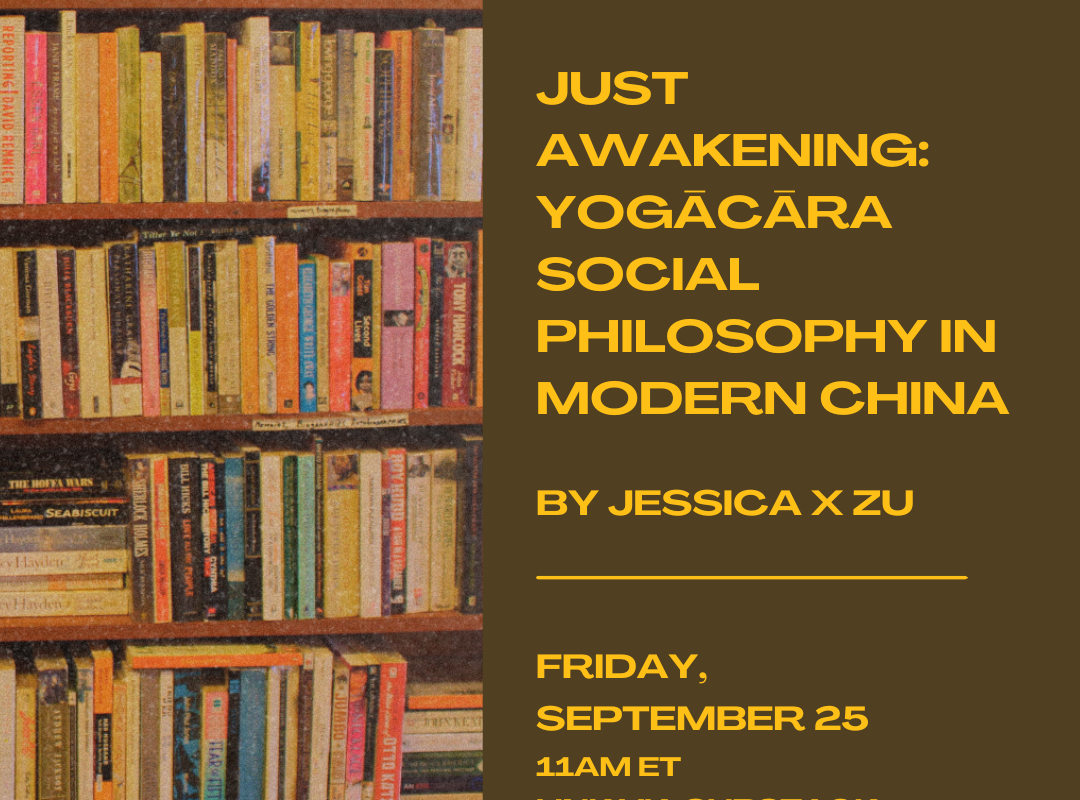
Author Interview: Just Awakening: Yogācāra Social Philosophy in Modern China by Jessica X. Zu

Just Awakening: Yogācāra Social Philosophy in Modern China, by Jessica X. Zu, is a work of “liberation Buddhology” that explores how early 20th-century Chinese intellectuals drew upon Yogācāra philosophy to build an irresistible, revolutionary activist movement to bring forth a nonviolent, just society. The book, which just won the prestigious Toshihide Numata Book Award in Buddhism, offers a compellingly clear account of what Zu terms “socio-soteriology”, a new revolutionary project of social philosophy and praxis.  The following interview is from our forthcoming special issue, “Movement Dharma: Towards a Buddhist Movement Chaplaincy.”   Brooke: I was tremendously excited to talk with you about your book, Jessica, and to introduce our Arrow readers to this outstanding text. As a community, we’ve been engaging deeply with concerns around collective liberation and themes of pluriversality, and the question of how to build more loving, just, relational, and non-dominating communities and societies. Your book offers us a path forward, and it also speaks directly to the heart of this special issue, “Movement Dharma,” and its concerns with what the dharma …

New Monthly Book Group

Join us for a monthly* online book club! We’ll dive into some of our favorite books on Buddhist philosophy and practice, contemplative studies, political theory and praxis, justice and liberation studies, and spiritual warriorship and activism. Our book club is open to all paid members on our substack, as well as supporting members of The Arrow Journal with current digital or member subscriptions. Substack members can access the book club directly through the book club tab on the substack web browser. Arrow website members will receive a Zoom link via email. The book club will generally meet on the third Friday of each month from 11a-12p ET, unless we’ve got another event scheduled. *We’ll also take a break for about one month each in the summer and winter. Zoom links will be posted in this channel. First Book Club: Friday, September 25th If you can’t make the live sessions, you can still participate by joining the conversation on substack!

All These Wars

the weight of a war on an empath feels like a post apocalyptic scientology…whoops i mean science fiction flick happening in real time. like something indestructible and relentless must perish in the hope for safety and softness for babies like running away in cellular and molecular waves is resistance like mischief and wit and trouble aren’t weapons of war anymore but drone strikes are and apparently Artificial intelligence… can’t spell school  so no crying. the weight on my mitochondrial self as an empath stings inside from this and all these wars perseverance sizzling out of my pores as I disappear onto the subway again. taking in the eyes of those still alive enough to raise them smiling about something abstract and meaningless  knowing only not to do so wouldn’t be less meaningless  knowing the detachment is worse than being an empath with the weight of all the pain from. all these wars… in America. repeat after me we are free. عبد ملك From our forthcoming issue, Like Fire.

BOOK REVIEW: When No Thing Works: A Zen and Indigenous Perspective on Resilience, Shared Purpose, and Leadership in the Timeplace of Collapse

What Endures in Times of Collapse “Faith is what we have when we believe in ourselves and what it is we are about, the tangibility of our horizon story (not the probability)” –Norma Kaweloka Wong In just thirteen slim chapters, Roshi Norma Wong’s When No Thing Works blends spirituality, Zen practice, Hawaiian Indigenous wisdom, collective resilience, and political strategy to address how we can adapt purposefully in a world of ongoing crises. An 86th generation Rinzai Zen Master and Abbot of Anko-in, Roshi Wong serves practice communities in Hawaii, the continental United States, and Toronto, Canada. She has also served as a state legislator and policy advisor to Governor of Hawaii, John Waihee. Released the week of the November 2024 presidential elections in the United States, Wong’s writing is a timely and vital offering to “look at the possibility beyond the fraughtness of the current moment.” If you are looking for a prescribed, straightforward “toolkit” for how to meet the world in these times, this is not the book for you. As a longtime student …

The End of ‘The World’: Contemplation and the Decolonisation of the Self

written by Peter Doran A Terminal Paradox At the ‘end of the world’ as constructed in the image of the West we’ll discover a terminal paradox: the prospect of a new ethics of flourishing—both human and ecological—as we discover new forms of liberation in an encounter with limits. There is no transformation or transition available in mere sacrifice or limitations that do not also imply an overturning of the container [‘the box’] that sustains the language and concepts of colonial modernity. The transformation or transition must entail an individual and collective preparedness to drop investments in the prevailing language games and the violent structures that sustain the unsustainable. In Zen, the encounter with limits and forms is a mark of liberation: at the heart of practice is a discipline that also entails a radical break with our deep investments and identifications with concepts and language games; not with a view to abandoning the world but with a view to falling into an unbridled love and compassion for all with whom we participate in our timeless …

Something Worth Defending

“It’s better to be a warrior in a garden than a gardener in a war.” Miyamoto Musashi, The Art of War These days, I find myself newly wrestling with questions of self defense and the uses of nonviolent—and even violent—resistance in the face of rising authoritarianism, aggression, and genocide. Six years ago, I traveled to Thailand with my younger sister and brother (and my brother-in-law) for our annual siblings trip. We were sitting at the beach bar planning our evening when my sister, Jen, told me that she and my brother, Pat, wanted to go see a professional Muay Thai fight later that night. “Absolutely not!” I said. “I don’t support or condone violence.” Muay Thai, or Thai boxing, is the national, full-contact martial art that involves striking, sweeps, and clinching techniques. I went on to explain how horrific it was to watch two people beat and bloody each other. Jen and Pat listened patiently. And then they smiled, stood up, and said, “OK! See you later!” And off they went.  I spent the evening …

Like Water: Practices for Maneuvering with Strength, Suppleness, and Clarity

“Water is fluid, soft, and yielding. But water will wear away rock, which is rigid and cannot yield. As a rule, whatever is fluid, soft, and yielding will overcome whatever is rigid and hard. This is another paradox: what is soft is strong.” – Lao Tzu   This special issue of The Arrow Journal came together around a core question: how do we navigate turbulent waters with clarity, strength, and suppleness? The articles, essays, poetry, and art contained within offer our readers diverse teachings on water through various streams of inquiry. This special issue is also complemented by a seminar and podcast series featuring martial artists, nondual spiritual practitioners, and movement leaders including Cynthia Ong, Paloma Schultz, Reverent Greg Snyder, and Autumn Brown beginning April 7, 2026. We hope you will join us! Issue Contents Chief Editor’s Introduction  Brooke D. Lavelle Doing “Nothing” as Ecological Practice Derek Gladwin and Naoko Ellis The Way of Water, the Way of (re)Existence: Embodied Contemplations on Grief, Precarity, and the Power of Transmutations Megan M. Fowler Something Worth Defending …

Courage is a Reverberation

At a recent gathering, a person voiced this question: “How do I grow courage? It seems like we’re gonna need to grow courage right now.” To which I replied: “Well, it won’t happen by thought or belief. Embodiment counts. And embodiment requires physical practice.” At that point, I was stuck. Here we were in a hotel ballroom. Answer given; answer useless. Without the accompanying physical experience, there would be no possibility of understanding what embodiment means, let alone its pathway to growing courage. A speaker has latitude, and I used it. Inviting folx for a sample of a practice, warning that shouting would be required. It is a sign of the times that most folx in the room accepted the invitation to stand and shout, in a very specific way. Feet hip width apart, with more weight on the balls of the feet. Standing tall, with dignity, eyes on the horizon. Relaxing shoulders, releasing all unnecessary tension. Arms to the side and bringing the breath low and slow. Low in the body, slow in breath, …

The Normalization of Terror: A Buddhist Response to ICE’s Extrajudicial Tactics

How we lose our democracy one arrest at a time I live in New York City, where the streets have become laboratories for state violence. Here in October, on Canal Street in Chinatown, masked federal agents descended in military-style trucks to arrest street vendors selling knockoff handbags. Four U.S. citizens were arrested and held for nearly 24 hours without charges, their families filing missing persons reports before they were released. Acting ICE Director Todd Lyons announced that New York City would see “an increase in ICE arrests,” promising operations that were “intelligence driven” and “not random,” even as bystanders watched agents use batons and pepper spray on vendors and protesters alike. The Canal Street raid was not an aberration. In early June, ICE’s New York office arrested more than 110 people on each of two consecutive days—the highest single-day totals in nearly two years. Agents have been staking out immigration courthouses, arresting people attending regular hearings in hallways, lobbies, and even bathrooms. The scenes are surreal: federal agents in tactical gear blocking streets, protesters tackled …

MOVEment: Lineage-Based Physical and Energetic Practices for Liberation

Guest Editor, Dr. Sheryl Petty writes, “I am excited about Ocha Dharma and Courage of Care’s partnership to co-host this special issue on physical and energetic practices as pathways to full liberation. Many may not be familiar with such practices as full liberatory paths and may be more familiar with seated and/or visionary practice, and potentially the relatively recent somatics field, strands of which have a focus on social systems and what might be considered more “relative” benefits. We are interested in supporting wider awareness of a broader spectrum of practices of body, speech/energy, and heart-mind, that can be engaged both individually and collectively. The body as a domain/site of liberation is not often spoken of in this hemisphere (to our knowledge), and the realm of non-dual Tantra (and Tantric Buddhism in particular) are also systems with which many are not familiar. We are using the word “liberation” as it is used in Buddhism and other wisdom traditions to refer to our ultimate, unadulterated, liberated state; free of contortion, impediment and constraint; engaged with and …