Issues

In addition to shorter essays and blogs, we believe that there is a need for rigorous intellectual work to develop the language, concepts, and perspectives that we aim to explore in this journal. Our issues provide a space for in-depth essays and scholarly articles, which we offer as downloadable PDFs. We hope you enjoy and invite you to participate in this unfolding conversation.

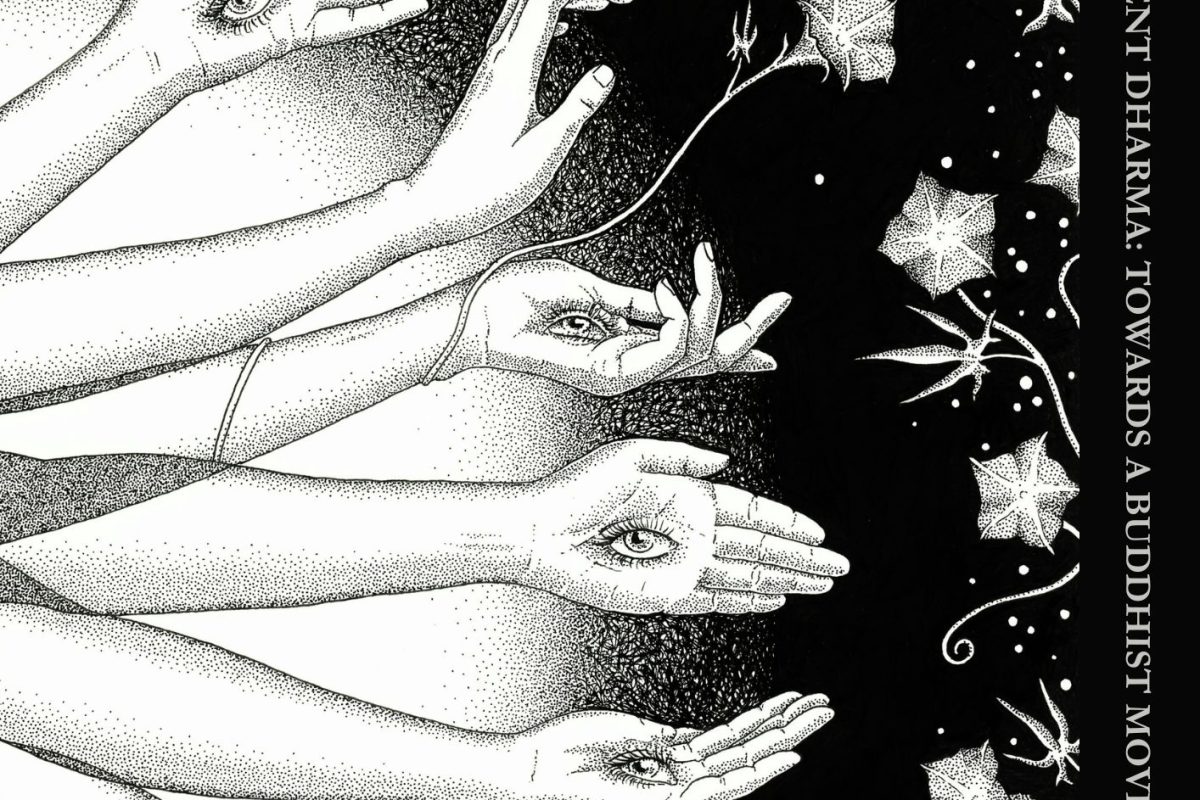
Movement Dharma: Towards a Buddhist Movement Chaplaincy

Our movements for justice and liberation are facing profound challenges in the face of rising authoritarianism, polarization, and violence. We are in need of politicized spiritual leaders and spiritual political leaders who can not only help us bear witness to suffering, but who can also provide transformative vision to help us realize our collective potential for liberation. While movement chaplaincy has been practiced arguably for generations—though it may not always have been named as such—no theorization of what Buddhism, per se, might offer our current movements for justice and liberation (beyond common, yet important, skills of accompaniment, presence, and bearing witness) have been, to our knowledge, thoroughly explored, taught, or practiced. We see an opportunity to theorize new ways of approaching the challenges our movements face from a nondual Buddhist frame, and to put the dharma in dialogue with many other movements with long spiritual and political traditions of liberatory work. We are calling this type of Buddhist movement chaplaincy “Movement Dharma.” This contributions in this issue are offered in response to this call. We …
Like Water: Practices for Maneuvering with Strength, Suppleness, and Clarity

“Water is fluid, soft, and yielding. But water will wear away rock, which is rigid and cannot yield. As a rule, whatever is fluid, soft, and yielding will overcome whatever is rigid and hard. This is another paradox: what is soft is strong.” – Lao Tzu   This special issue of The Arrow Journal came together around a core question: how do we navigate turbulent waters with clarity, strength, and suppleness? The articles, essays, poetry, and art contained within offer our readers diverse teachings on water through various streams of inquiry. This special issue is also complemented by a seminar and podcast series featuring martial artists, nondual spiritual practitioners, and movement leaders including Cynthia Ong, Paloma Schultz, Reverent Greg Snyder, and Autumn Brown beginning April 7, 2026. We hope you will join us! Issue Contents Chief Editor’s Introduction  Brooke D. Lavelle Doing “Nothing” as Ecological Practice Derek Gladwin and Naoko Ellis The Way of Water, the Way of (re)Existence: Embodied Contemplations on Grief, Precarity, and the Power of Transmutations Megan M. Fowler Something Worth Defending …

MOVEment: Lineage-Based Physical and Energetic Practices for Liberation

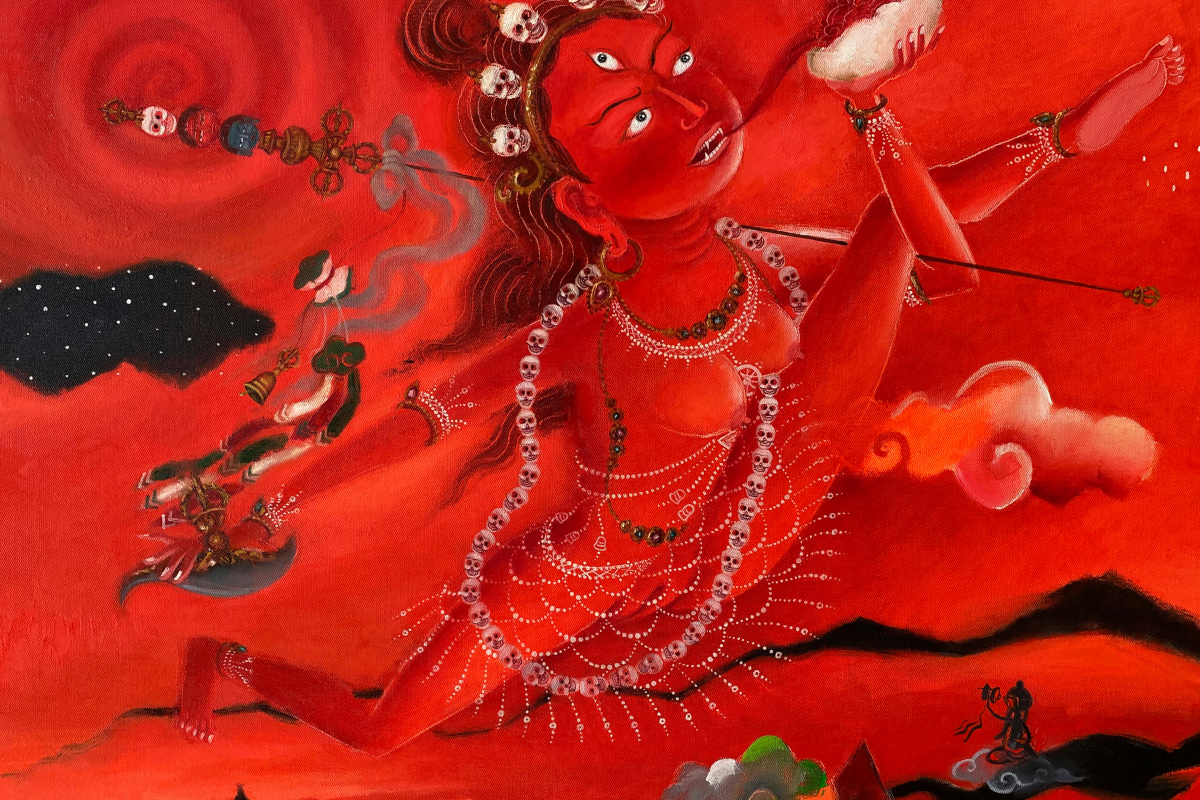
Guest Editor, Dr. Sheryl Petty writes, “I am excited about Ocha Dharma and Courage of Care’s partnership to co-host this special issue on physical and energetic practices as pathways to full liberation. Many may not be familiar with such practices as full liberatory paths and may be more familiar with seated and/or visionary practice, and potentially the relatively recent somatics field, strands of which have a focus on social systems and what might be considered more “relative” benefits. We are interested in supporting wider awareness of a broader spectrum of practices of body, speech/energy, and heart-mind, that can be engaged both individually and collectively. The body as a domain/site of liberation is not often spoken of in this hemisphere (to our knowledge), and the realm of non-dual Tantra (and Tantric Buddhism in particular) are also systems with which many are not familiar. We are using the word “liberation” as it is used in Buddhism and other wisdom traditions to refer to our ultimate, unadulterated, liberated state; free of contortion, impediment and constraint; engaged with and …

The Power of the Pluriverse

  Issue Contents Managing Editor’s Introduction Ashley Wilson  Chief Editor’s Introduction Brooke D. Lavelle  One-World Worlding in Our Movements: A Call and Path for Pluriversal  Practice Brooke D. Lavelle, Katrine Bregengaard, and Maha El-Sheikh  Roundtable: Why Pluriversal Practice Can Strengthen Our Movements for Healing, Justice, and Liberation Maha El-Sheikh, Farah Mahesri, katie robinson, Tina Strawn, and Brooke D. Lavelle  What If We’re All Partially Right? Stephanie Lepp  Imagining the Otherwise: Black Everyday Utopia in Berlin Fọlásadé Àjàyí  Imagine Peace: A Reason to Keep Living Hassaun Ali Jones-Bey  The Middle Path of Zen: Reconciling Everyday Heartbreak and Rage with Possibility Monika Son On Scorekeeping & Nonduality Sarah Caroline Murphy  Embracing Our Kin through Deep Listening Practices: Intersections of  Kapwa and Sonic Meditations Marlo De Lara  At the Edge of Worlds Ending/Birthing: What it Means to Be a True Human Being Inés Hernández-Ávila  Conversation: Reimagining Human Rights Education Ivana Radačić & Donaven Smith   Transgressive Agents of Liberation: Psychedelics and Pluriversality Valeria McCarroll  Community Dreamwork as Pluriversal Practice Stephanie Knox Steiner and HyoYoung Minna Kim  Shaping New Worlds …

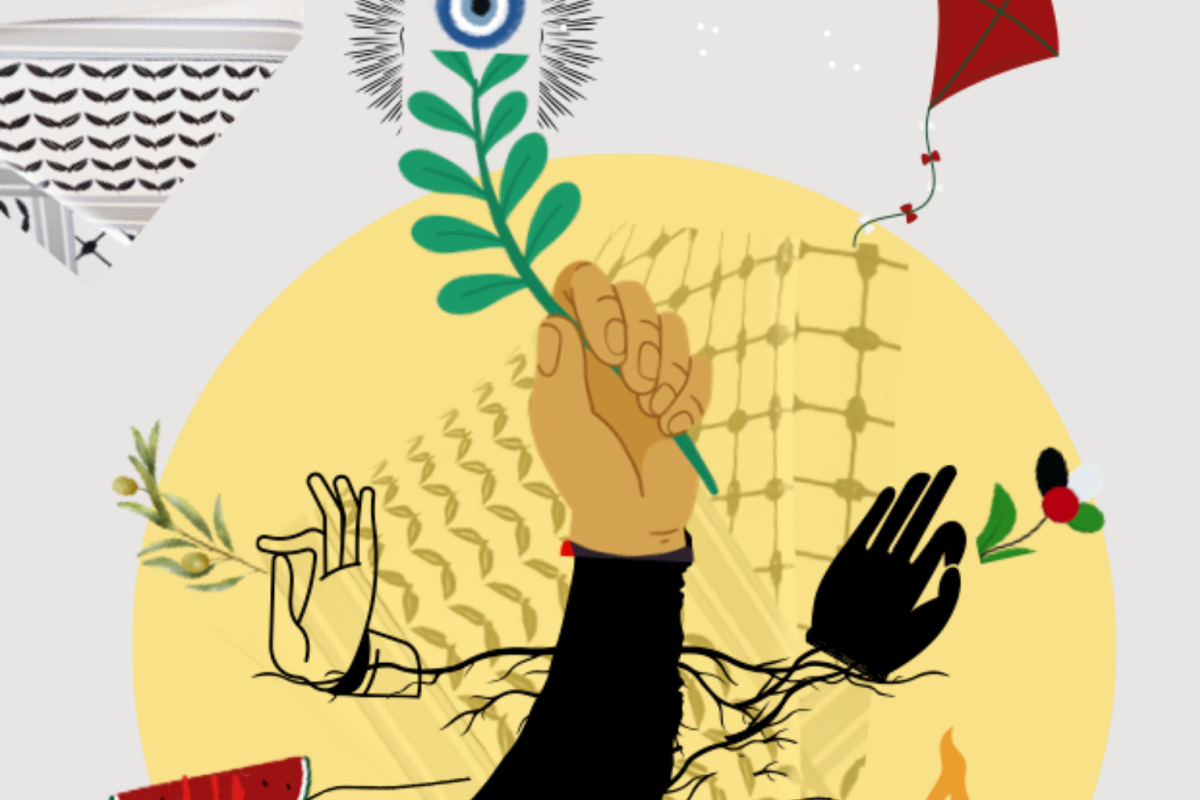
Steadfastness & Solidarity Through Genocide: SWANA & Ally Voices

  Issue Contents Chief Editor’s Introduction Maha El-Sheikh Guest Editor’s Introduction Kareem Ghandour Square Break  Sarah Sao Mai Habib Interview: Sumood in Collective Resistance and Healing  Ashira Darwish Is This What Was Meant for You?  Emmanuelle Khoury Conversations: The Refuge of Yaqin  Lubna Masarwa and Kareem Ghandour Love in Times of Khibezeh  Banah el Ghadbanah Roundtable: Sacred Grieving, Rage, and Activism Nadia Abdel-Karim, Maia Marie, and Kritee (Kanko) Conversations: The Refuge of Yaqin  Lubna Masarwa and Kareem Ghandour Sumud: Each Gen Has Its Gem  Diana Salqan Extracts from Gaza: Calling for a Dharma Response  Kareem Ghandour, Weyam Ghadbian, and Sara Shapouri What to Bring to a War Protest Yahia Lababidi Excerpt from The Land in Our Bones  Leyla K. Feghali Hakurat Al-Bireh: A Return to Our Agrarian Roots  Aisha Mansour and Shurouq Qawariq Conversation: Land, Biodiversity, and the Colony  Mazin Qumsiyeh, Zena Cumpston, and Rasha Tayeh The Eclipse  Yahia Lababidi Original artwork for this issue by Kareem Ghandour and Sarah Sao Mai Habib

Reflections and New Directions in Wakeful Society, Culture, and Politics

  Issue Contents Editor’s Introduction Gabriel Dayley Releasing the Bowstring Towards Wakeful Society, Culture, and Politics Gabriel Dayley Embracing Our Wholeness: The Importance of Embodiment, Lineage, Spirituality, and Social Justice Arisika Razak Mahāprajāpatī: An Arrow Ancestor James K. Rowe What Does it Mean to be Wakeful? LaDawn Haglund Data, Practice, Sandwiches, Possibilities Rachel DeMotts Space to Dream: Reflections on Teaching, Writing, and Living with The Arrow Naya Jones Original artwork for this issue by Chetna Mehta and Rae Minji Lee Reprinted artwork from previous issues in The Arrow by Alicia Brown, Chetna Mehta, Rae Minji Lee, and Star Barker

Undisciplined Archives: Dreaming Across Black Geographies

  Issue Contents Journal Editor’s Introduction: An Antidote and A Map: Narrative Cartographies for Black Dreamers shah noor hussein, Managing Editor Guest Editor’s Introduction: We Were Dreamt: Reflections on Black Dreaming as a Liberatory Practice Naya Jones Sleeping in Kwame’s Room: Crocodile Dreams of Freedom from a Summer Return to Kumasi Anthony Kwame Harrison In this genre-defying piece—positioned somewhere between personal essay, family biography, and historical research paper—I reflect on my first time returning to my city of birth, Kumasi, Ghana (the capital of Ashanti) in summer 1995. For one magical summer, I stayed with Peggy Appiah, a dear family friend and the mother of my namesake. A series of dreams I had while in Ghana frame a wandering circuitous account of my experiences with people, animals, and place. Key themes surround: Ghanaian Independence in the context of Pan-Africanism; the meaning of dreams in the Akan/Ashanti world(view); family, home, and allegiance both within and outside of Ashanti society; and the capacity of proverbs, stories, and, above all else, dreams to animate new modes of freedom …

Engaged Buddhism: Honoring Thich Nhat Hanh’s Life and Teachings (1926-2022)

  Issue Contents Editor’s Introduction Ashley Wilson A Cloud Never Dies: Thich Nhat Hanh’s Community Reflects on the Zen Master’s Continuation in the World Stephen Pradarelli, Sister Chan Khong, Sister Chan Dieu Nghiem, Brother Phap Dung, Brother Phap Huu Thich Nhat Hanh’s Poetics of Care Jesse Curran In this short essay, I situate the immense value of Thich Nhat Hanh’s writing to social justice ethics. Drawing on my own experience as a student, educator, yoga instructor, and meditation practitioner, I reflect upon how meaningful his language has been to my own growth as an academic and activist. Ultimately, I argue that Nhat Hanh’s literary style embodies a practice of virtuous support for the reader, what I refer to as his “poetics of care.” Keywords: ethics, poetics, virtue, care Walk with Me Jason Zevenbergen In the Symphony of the Storm: Four Phases of Engaged Buddhism in Thich Nhat Hanh’s Life Kaira Jewel Lingo Cultivating Fearlessness in the Midst of Suffering: A Conversation with Sister Dang Nghiem Here, Because You Are There: After Thich Nhat Hanh Dolores Walshe …

Contemplative Superpowers for Social Change

  Issue Contents Journal Editors’ Introduction shah noor hussein & Gabriel Dayley Contemplative Superpowers for Social Change James K. Rowe, Farah Godrej, & Shannon Mariotti Black Buddhists and the Black Radical Tradition: Reflections on an Africana Buddhist Hermeneutic Tracey E. Hucks Breaking our Brains and Hearts Open: Dr. Rima Vesely-Flad’s Black Buddhists and the Black Radical Tradition Toni Pressley-Sanon In Response: A Black Buddhist Hermeneutic within the Field of Buddhist Studies Rima Vesely-Flad Embodying Transformation in Carceral Spaces: On Farah Godrej’s Freedom Inside Anita Chari Violence, Liberation, and Freedom Inside Robin L. Turner In Response: (Re)Thinking Freedom through Refuge & Embodiment Farah Godrej Sokthan Yeng and the Superpower of Buddhist Feminism Leah Kalmanson Sokthan Yeng and the Resuscitation of Anger in Buddhist Feminism Jason M. Wirth In Response: The Magic of Feminist Sanghas Sokthan Yeng Artwork by Rae Minji Lee and Chetna Mehta

Between Amitabha and Tubman: Black Buddhist Thought

  Issue Contents Journal Editor’s Introduction: Towards the Impossible Possibility of Black Buddhist Liberation shah noor hussein, Managing Editor Guest Editor’s Introduction: Making Black Buddhist Writing on an Apocalyptic Earth Shanté Paradigm Smalls Roundtable: Black-led and BIPOC Sanghas Shanté Paradigm Smalls in conversation with Zenju Earthlyn Manuel, Pamela Ayo Yetunde, Vimalasara Mason-John, Claudelle R. Glasgow, Sheryl Petty, Aishah Shahidah Simmons, and Laurie Amodeo Honoring Ancestors in Black Buddhist Practice: Rituals of Devotion and Resilience Rima Vesely-Flad This article examines how Black Buddhists have embraced ancestral practices as they elaborate dharma teachings in convert Buddhist communities. Such practices include storytelling, devotional bowing, drumming, dancing, and chanting, as well as honoring African-derived images and ancestors on Buddhist altars. This article emphasizes the importance of honoring ancestors and the land within different lineages, as well as practices for incorporating indigenous rituals into Buddhist practices. For indigenous-oriented Buddhist practitioners, the history of ancestors carries meaning for themselves, their family members, and their broader community. Furthermore, the courage, determination, and perseverance embodied by ancestors is mirrored in the resilience of …

Rest and Creativity

  Issue Contents Editor’s Introduction: The Gorilla and the Cardinal Gabriel Dayley Lazy Days in the Clay Fields Melanie Anne Gin To rest is to allow the body to discern the path forward, to follow its intuition to the clay fields, the dishes, and the garden. Keywords: mindfulness, rest, creativity Body, (un)Body: Breaking with the Unbearable Kirsten Mundt As climate change and the COVID-19 pandemic wash away our illusions that life will go our way because we deserve it, or because we are good, I often struggle to discern accountable action when my body does not provide guid- ance. Like many others, I am faced with the task of choosing when I must col- lude with toxic systems to survive, and what to do when my choices have run out. Keywords: decoloniality, hapticality, embodiment, trauma, cruel optimism Rest and the Five Remembrances Mario Obando The short essay shares my personal history finding an engaged Buddhism rooted in racial justice within and beyond the violence of the publish and perish model of academia. Structured around “The Five …

Healing Social and Ecological Rifts Part 2

  Issue Contents Introduction from the Journal Editors by Gabe Dayley and shah noor hussein In Conversation LaDawn Haglund and Adam Lobel Unfolding Universe | L’univers desplegant-se  Carles Ibáñez ‘If you give us the best place in the world, it is not so good for us as this:’ Some Reflections on Catastrophe, Consciousness, and the Right to Home Heather Williams  Dead Turtle Animist: Towards a Non-Natural Ecopolitical Spirituality Adam Lobel Recreating Our Communities to Respond to the Climate Emergency Keri E. Iyall Smith The climate is changing and causing calamities that we will need to respond to as communities in order to survive and thrive. Indigenous approaches to the natural world, equality, sustainability, economic exchange, prioritizing the collective, and participatory decision-making offer a path to recuperation of the natural environment and community-building to improve the welfare for us all together. Keywords: Environment, Climate Change, Participatory Decision-Making, Indigenous People, Capitalism, Community The Turtle and the Falling Sky: Yanomami Mimesis, F(r)iction, and Performance John C. Dawsey This essay compares the thought, practices, and performance of Yanomami peoples …

Healing Social and Ecological Rifts Part 1

  Issue Contents Introduction from the Journal Editors by Gabe Dayley and shah noor hussein Introduction from the Guest Editor by LaDawn Haglund An Ecodharma Prayer of Earth Adam Lobel This poem was composed spontaneously near a red cardinal in western Pennsylvania on the occasion of the 50th Anniversary of Earth Day, amidst a global pandemic, rising temperatures, melting ice, and mass extinction, April 2020.  Death Denial, Human Supremacy, and Ecological Crisis: Indigenous and Euro-American Perspectives James Rowe & Darcy Mathews We live in a period of heightened environmental crises and scholars have long pointed to narratives of human supremacy as central drivers of ecological destruction. We explore an overlooked but powerful explanation for stubborn attachment to the idea of human supremacy in the Euro-Americas: the political force of death denial. Human feelings of fear and belittlement in the face of finitude easily become fuel for compensatory attachments to narratives of supremacy. In making this connection between death denial and narratives of human supremacy, we draw on the work of anthropologist Ernest Becker and Indigenous …

Issue cover

The Necessity of Including Embodiment and Lineage in Racial Justice Work

  Issue Contents Chief Editor’s Introduction (available to subscribers in the complete issue) by Gabe Dayley Guest Editor’s Introduction (available to subscribers in the complete issue) by Kelsey Blackwell Black Boys by Vernon Keeve III Race and the Body: Why Somatic Practices Are Essential for Racial Justice by Kelsey Blackwell Body Knowing as a Vehicle for Change by Arawana Hayashi Borders by Jessica Stern ‘May I Also Be the Source of Life’: Embodied Resistance, Existence, and Liberation in Bodymind as It Is by Mushim Patricia Ikeda How to Love a Mestiza Woman by Laura Soto Examining Whiteness with Meditation by Kalen Tenderness Tierney On Lineage and Whiteness by Alexandria Barnes I’ll Meet You There by Jahan Khalighi Reflections on Embodiment, Culture, and Social Justice Work in Selected Buddhist Traditions by Arisika Razak The Movement Within the Movement text and poetry by Nicole Klaymoon photography by David Wilson mask art by Tigre Bailando Cover design and illustrations by Alicia Brown Comments The Arrow welcomes comments in response to issues we publish. Please submit comments for review to editor[at]arrow-journal.org. Comments may expand on an …

Dharma, Degrowth, and Climate Change

  Issue Contents FEATURE Contemplating the More-than-Human Commons by Zack Walsh In Response Social and Ecological Ethics by Asoka Bandarage Drala of the Landscape: Rights of the River by Rachel DeMotts Beyond Theory: Relating to Dominant Systems and Manifesting Social Alternatives in Dharma Communities by David Kahane FICTION The Tale of Stormtamer by Austin R. Pick In Response A Buddhist Depiction of Ecological Dystopia by Holly Gayley Cover design and illustrations by Alicia Brown Comments The Arrow welcomes comments in response to issues we publish. Please submit comments for review to editor[at]arrow-journal.org. Comments may expand on an idea, raise questions, or make a critique. They should be no more than 500 words. Regardless of the stance toward the article that a comment takes, comments should be substantive and respectful, engaging the merits of the argument.

Contemplative Empowerment and Social Change

[give_form id=”1545″]     Cover design by Alicia Brown   Download Individual Articles Below Editor’s Introduction We are pleased to share with you our first peer-reviewed collection, embodying The Arrow’s mission to create a space for rigorous, scholarly investigation of the relationship between contemplative practice and teachings on the one hand and issues of politics, economics, ecology, and activism on the other. With this issue, we break new ground in the field of contemplative studies by examining directly the ways in which mindfulness practices and contemplative teachings can be put in service of responsible citizenship, social justice, and social transformation. With the commodification of mindfulness and yoga continuing apace, and with most scholarly research on these practices still focusing on their individual benefits—psychological and physiological—we are thrilled to publish this first peer-reviewed issue, featuring articles that bring the political relevance of such practices and teachings into relief. In “Good-for-Nothing Practice and the Art of Paradox: The Exemplary Citzenship of Ta-Nehisi Coates,” Dean Mathiowetz explores meditation as one method that may help people to embody qualities …

Teaching Contemplative Environments

Issue Contents Guest Editor’s Introduction (available to subscribers in the complete issue) by Rachel DeMotts Inner and Outer Ecologies: Contemplative Practice in an Environmental Age by Jacob Richey and Paul Wapner Sending and Taking: Teaching a Practice for Nature by Rachel DeMotts Teaching and Learning in Nearby Nature by Amy E. Ryken Cover design and photography by Alicia Brown