Author: Derek Gladwin and Naoko Ellis

Doing “Nothing” as Ecological Practice

Sit and Do Nothing for the Planet In today’s highly polarized world, it is likely no secret that conversations about the environment have become political flashpoints—an urgent priority for some, aggressively resisted by others. This divide stifles meaningful dialogue and action, often trapping us in demoralizing cycles of manufactured conflict while the planet, and all life on it, continue to suffer.  More and more people are asking, “what can I actually do about climate change?” Others find themselves worrying that “it never feels like I’m doing enough to make a difference.” We, too, as environmental educators and researchers, can relate and empathize with this. We have spent years observing and reflecting, and then asking:  How do we teach and learn in an unraveling world? How do we live in these interconnected systems? How can we adapt, not just to climate change, but to epistemic changes, embracing multiple ways of knowing and learning?  After all, learning is much more than just accumulating facts or information. What we (the authors) have unlearned, with the need to reconsider …


Crapitalism: Psychoanalysis and the Profit Motive

As the old proverb goes, “It’s an ill bird that fouls its own nest.” From a god’s eye view, we’re pretty sick birds, spewing massive amounts of carbon into our atmosphere and dumping an endless stream of plastics into our oceans. Why is that? On first glance, the answer is obvious. We have an economic system organized around the endless pursuit of more, excess known technically as the profit motive. Always seeking more on a finite planet was never going to end well.  Given the profit motive’s centrality to global capitalism, it’s curious how rarely we discuss the motivations behind it. Interestingly, Karl Marx—the great critic of capitalism—didn’t have much to say about greed. For Marx, greed was an ugly human impulse that predated capitalism. The system, however, incentivized the impulse, throwing it out of proportion with our other drives. Change the system, and the problem falls away. This might be true, but the greed and corruption that helped sink many socialist regimes are cause for pause. Understanding the deeper motives behind the “more” motive …

The Power of the Pluriverse

  Issue Contents Managing Editor’s Introduction Ashley Wilson  Chief Editor’s Introduction Brooke D. Lavelle  One-World Worlding in Our Movements: A Call and Path for Pluriversal  Practice Brooke D. Lavelle, Katrine Bregengaard, and Maha El-Sheikh  Roundtable: Why Pluriversal Practice Can Strengthen Our Movements for Healing, Justice, and Liberation Maha El-Sheikh, Farah Mahesri, katie robinson, Tina Strawn, and Brooke D. Lavelle  What If We’re All Partially Right? Stephanie Lepp  Imagining the Otherwise: Black Everyday Utopia in Berlin Fọlásadé Àjàyí  Imagine Peace: A Reason to Keep Living Hassaun Ali Jones-Bey  The Middle Path of Zen: Reconciling Everyday Heartbreak and Rage with Possibility Monika Son On Scorekeeping & Nonduality Sarah Caroline Murphy  Embracing Our Kin through Deep Listening Practices: Intersections of  Kapwa and Sonic Meditations Marlo De Lara  At the Edge of Worlds Ending/Birthing: What it Means to Be a True Human Being Inés Hernández-Ávila  Conversation: Reimagining Human Rights Education Ivana Radačić & Donaven Smith   Transgressive Agents of Liberation: Psychedelics and Pluriversality Valeria McCarroll  Community Dreamwork as Pluriversal Practice Stephanie Knox Steiner and HyoYoung Minna Kim  Shaping New Worlds …

Steadfastness & Solidarity Through Genocide: SWANA & Ally Voices

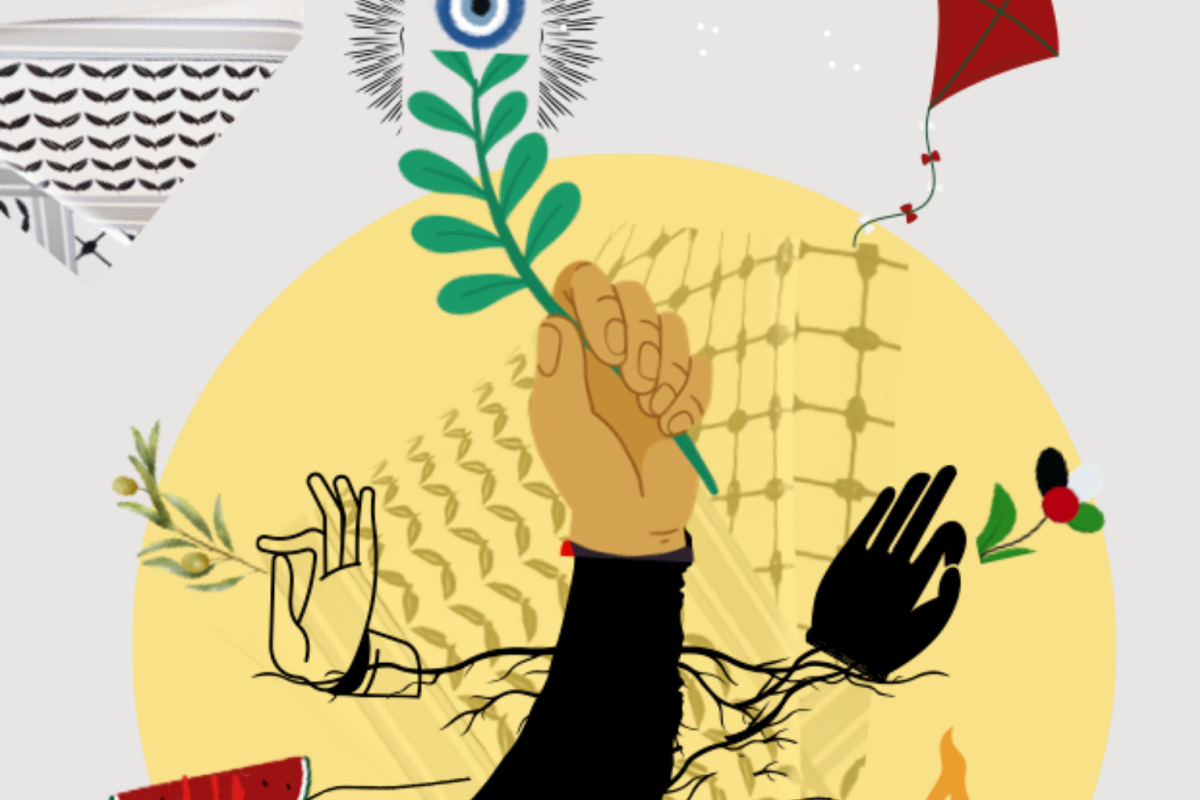
This issue “Steadfastness & Solidarity Through Genocide: SWANA & Ally Voices” (Volume 11, Number 1) is now open access for all given its critical and timely nature. Guest Editor, Kareem Ghandour writes, “Through a year of live-streamed genocide, the world has become witness to the power of sumood. The world has been shaken not only by the violence inflicted on the Palestinian people, but by the indigenous spirit of Palestinian resistance. Sumood has become more recognized as an expression of sacred activism and a lived experience of spiritual resistance rooted in love, community, culture, and unshakeable connection to land… In these pages are different expressions of Sumood, shared through stories, conversations, historical accounts, poetry, and spiritual teachings. This issue also makes space for the emergence of a radical spiritual pathway, opening us to the ways that Gaza is liberating us and generously offering us spiritual teachings born from a ground of unimaginable horror and destruction. These teachings on steadfastness, faith, and collective healing offer us guidance on how to continue resisting and meeting these times …

Steadfastness & Solidarity Through Genocide: SWANA & Ally Voices

  Issue Contents Chief Editor’s Introduction Maha El-Sheikh Guest Editor’s Introduction Kareem Ghandour Square Break  Sarah Sao Mai Habib Interview: Sumood in Collective Resistance and Healing  Ashira Darwish Is This What Was Meant for You?  Emmanuelle Khoury Conversations: The Refuge of Yaqin  Lubna Masarwa and Kareem Ghandour Love in Times of Khibezeh  Banah el Ghadbanah Roundtable: Sacred Grieving, Rage, and Activism Nadia Abdel-Karim, Maia Marie, and Kritee (Kanko) Conversations: The Refuge of Yaqin  Lubna Masarwa and Kareem Ghandour Sumud: Each Gen Has Its Gem  Diana Salqan Extracts from Gaza: Calling for a Dharma Response  Kareem Ghandour, Weyam Ghadbian, and Sara Shapouri What to Bring to a War Protest Yahia Lababidi Excerpt from The Land in Our Bones  Leyla K. Feghali Hakurat Al-Bireh: A Return to Our Agrarian Roots  Aisha Mansour and Shurouq Qawariq Conversation: Land, Biodiversity, and the Colony  Mazin Qumsiyeh, Zena Cumpston, and Rasha Tayeh The Eclipse  Yahia Lababidi Original artwork for this issue by Kareem Ghandour and Sarah Sao Mai Habib

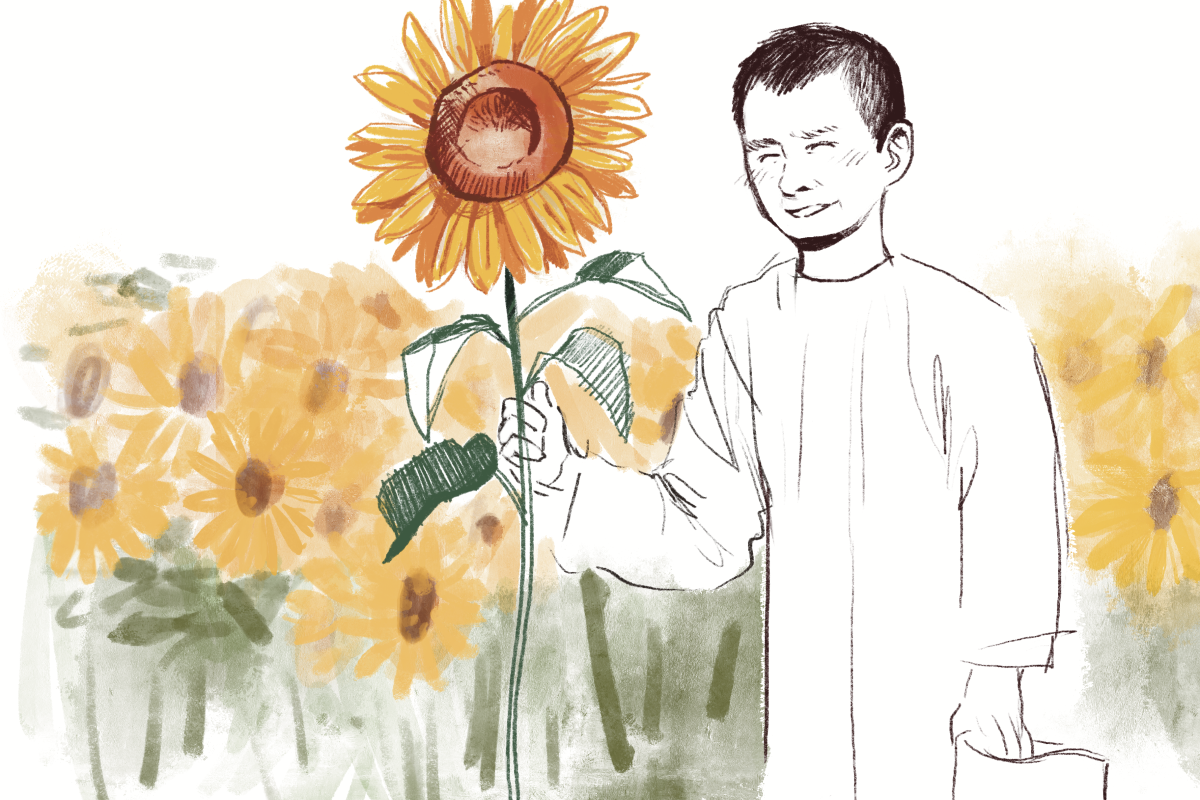
A young Thich Nhat Hanh Illustration by Rae Minji Lee

In the Symphony of the Storm: Four Phases of Engaged Buddhism in Thich Nhat Hanh’s Life

This essay appears in the issue “Engaged Buddhism: Honoring Thich Nhat Hanh’s Life and Teachings (1926-2022)” (Volume 10, Number 1). Click here to subscribe and download the entire issue.  Subscribe to The Arrow Journal to read the complete issue, plus unlimited access to the only journal dedicated to investigating the meeting of contemplative wisdom and the systemic challenges facing our world. Already subscribed? Read the issue: Engaged Buddhism: Honoring Thich Nhat Hanh’s Life and Teachings (1926-2022) | Vol. 10, No. 1 | Spring 2023

There is a Love Beyond Hope

In my decades working on environmental problems and social change, I was motivated by the hope that humanity would change everything in time to slow climate change and transition to a sustainable way of life. I even talked of it that way, without looking more closely at that idea of “hope.” What did I mean by that? Could I be motivated without such a hope? In my rush to achieve an impact in the world, I did not take the time to explore our shared cultural story about hope, despite being a part-time academic, where deeper inquiry is often expected. Eventually, evidence from the real world forced me to think again about hope and to ultimately free myself to live creatively in the face of societal disruption and collapse.1 I discovered there is a love beyond hope, a love which can guide active engagement in society without attachment to outcomes. Through that engagement, I met many people attempting to reduce harm and contribute to possibilities within our environmental predicament without ‘fairytales’ of success required to …

Thich Nhat Hanh’s Poetics of Care

This essay appears in the issue “Engaged Buddhism: Honoring Thich Nhat Hanh’s Life and Teachings (1926-2022)” (Volume 10, Number 1). Click here to subscribe and download the entire issue.  Subscribe to The Arrow Journal to read the complete issue, plus unlimited access to the only journal dedicated to investigating the meeting of contemplative wisdom and the systemic challenges facing our world. Already subscribed? Read the issue: Engaged Buddhism: Honoring Thich Nhat Hanh’s Life and Teachings (1926-2022) | Vol. 10, No. 1 | Spring 2023

A Cloud Never Dies: Thich Nhat Hanh’s Community Reflects on the Zen Master’s Continuation in the World

You have said that “Time is stilled in eternity, where love and the beloved are one.” Dear Thay, you are present here with us in this very moment, as we climb the hill of the 21st Century together. What you have not yet completed, we promise to complete for you. We would like to express our deep love and gratitude as we make the vow to carry your teachings, compassion, and insight far into the future. —Excerpt from eulogy written by disciples of Thich Nhat Hanh1 A FEW DAYS AFTER Thich Nhat Hanh’s death, following the morning meditation service at Deer Park Monastery in Escondido, California, a man walked up to Brother Pháp Dung, joined his palms, bowed to the monk, and asked if he could share a story. The man said that he had been watching the live-streamed ceremonies honoring Thay (“teacher” in Vietnamese) from his home, but then felt an over- powering urge to drive to Deer Park and be there in person. Not so he could be with other mourners, necessarily, but …